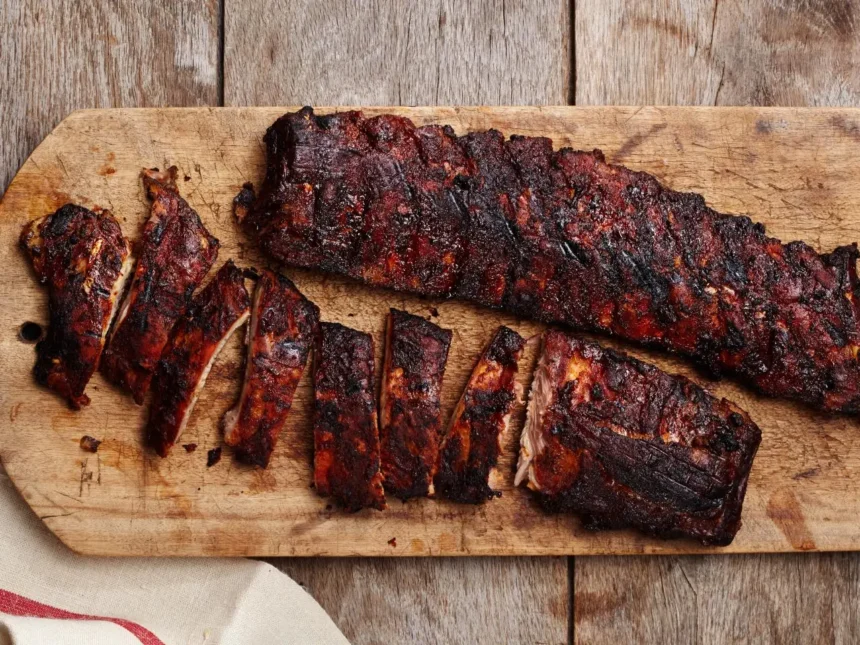
Smoked ribs represent the pinnacle of backyard barbecue, combining patience, technique, and quality ingredients to create fall-off-the-bone tenderness with deep smoky flavor. Whether you’re firing up your first smoker or perfecting your craft, this comprehensive guide will walk you through everything you need to know about creating restaurant-quality smoked ribs at home.
- Understanding Rib Types: Choosing Your Cut
- Regional Smoked Ribs Styles
- Equipment Investment & ROI Analysis
- The Master Smoked Ribs Recipe (Kansas City Style)
- Wood Selection Guide
- Common Mistakes & Solutions
- Frequently Asked Questions
- Scaling for Events: Feeding a Crowd
- Seasonal Considerations
- Health & Nutrition Considerations
- Storage & Food Safety
- Advanced Techniques for Enthusiasts
- Final Investment Summary & ROI
- Conclusion: Your Path to BBQ Mastery
With the right approach, smoking ribs transforms from intimidating to achievable. This guide covers multiple smoking methods, regional styles, and expert techniques that will have your neighbors asking for your secret recipe.
Understanding Rib Types: Choosing Your Cut
Baby Back Ribs (Loin Ribs)
Description: Cut from the top of the rib cage between the spine and spare ribs, baby back ribs are shorter, curved, and more tender than spare ribs. They typically weigh 1.5-2 pounds per rack and contain less fat.
Pros:
- Naturally tender with less cooking time needed (4-5 hours)
- Lean meat appeals to health-conscious eaters
- Easier to handle for beginners
- Consistent size makes timing predictable
- Premium presentation
Cons:
- More expensive ($4-7 per pound)
- Can dry out if overcooked
- Less forgiving for timing mistakes
- Smaller meat yield per rack
Investment: $25-40 per rack (serves 2-3 people)
ROI Analysis: Restaurant baby back ribs cost $18-28 per person. Home-smoking costs approximately $10-13 per person including wood and seasonings, saving 45-55% while providing superior quality and larger portions.
Best For: First-time smokers, those preferring leaner meat, formal dinner presentations
St. Louis Style Ribs (Trimmed Spare Ribs)
Description: Spare ribs trimmed into a rectangular shape by removing the sternum bone, cartilage, and rib tips. This creates uniform thickness for even cooking. The rack weighs 2.5-3 pounds and offers the perfect balance of meat and fat.
Pros:
- Excellent meat-to-bone ratio
- Higher fat content keeps meat moist during long smoking
- More forgiving for beginners
- Rectangular shape fits most smokers efficiently
- Rich, beefy flavor
- Better value than baby backs
Cons:
- Requires 5-6 hours smoking time
- Slightly tougher connective tissue requires proper technique
- Generates rib tips as a byproduct (though these are delicious)
Investment: $18-30 per rack (serves 3-4 people)
ROI Analysis: At $6-8 per person for home-smoked St. Louis ribs versus $20-30 at restaurants, you save 65-75%. These ribs provide the best cost-to-quality ratio for most home cooks.
Best For: Those seeking authentic BBQ flavor, entertaining groups, competition-style ribs
Spare Ribs (Full Spare Ribs)
Description: The whole rib cut from the belly side, including the sternum and cartilage. These are larger, meatier, and fattier than other cuts, weighing 3-4 pounds per rack.
Pros:
- Least expensive option ($3-5 per pound)
- Maximum meat per rack
- Rich, fatty flavor that stays juicy
- Rib tips included (extra bonus meat)
- Traditional, authentic BBQ cut
Cons:
- Irregular shape can cause uneven cooking
- Longer smoking time (6-7 hours)
- More trimming required for presentation
- Tougher connective tissue
Investment: $15-25 per rack (serves 4-5 people)
ROI Analysis: Most economical choice at $4-6 per person, compared to $22-32 in restaurants (80-85% savings). Best value for large gatherings.
Best For: Budget-conscious cooks, large gatherings, those who love fatty, rich meat
Regional Smoked Ribs Styles
Kansas City Style Smoked Ribs
Description: The most popular American style featuring a thick, sweet tomato-based sauce applied during the final cooking stage. Ribs are rubbed with a complex spice blend before smoking with hickory or oak.
Technique:
- Apply generous dry rub 2-12 hours before smoking
- Smoke at 225-250°F for 5-6 hours
- Sauce applied in last 30 minutes, caramelizing on the surface
- Creates a sticky, glossy bark
Signature Ingredients: Brown sugar, paprika, garlic powder, cayenne pepper, tomato-based BBQ sauce
Pros:
- Universally appealing sweet-savory balance
- Thick bark provides textural contrast
- Sauce caramelization adds depth
- Forgiving style for beginners
Cons:
- Sugar in rub and sauce can burn if temperature too high
- Some purists prefer non-sauced ribs
Investment: $35-45 total (includes specialty rub, sauce, wood)
Best For: Families, those who love classic BBQ flavor, crowd-pleasing cookouts
Memphis Style Smoked Ribs (Dry Rub)
Description: Champion of dry-rubbed ribs, Memphis style focuses on the meat and smoke without sauce. A complex spice rub creates a flavorful crust, served with sauce on the side or none at all.
Technique:
- Generous dry rub application 4-24 hours before cooking
- Smoke at 225-240°F for 5-6 hours with hickory wood
- No sauce during cooking
- Optional mopping with vinegar-based liquid
Signature Ingredients: Paprika, black pepper, cumin, oregano, garlic, sometimes celery seed
Pros:
- Pure meat and smoke flavor shines through
- No risk of burnt sugar
- Lower sugar content for dietary preferences
- Showcases smoking technique and quality meat
Cons:
- Less visual appeal (no glossy finish)
- Can be dry if overcooked
- Requires higher quality ribs
Investment: $30-40 total (premium rub spices, quality wood)
Best For: BBQ purists, low-sugar diets, showcasing premium meat quality
Texas Style Smoked Ribs
Description: Simple, bold approach using minimal seasoning to highlight beef or pork flavor. Often uses beef ribs (short ribs) with just salt, pepper, and smoke from post oak or mesquite.
Technique:
- Simple rub: coarse salt and black pepper (sometimes garlic)
- Smoke at 250-275°F (slightly higher than other styles)
- Beef ribs: 6-8 hours; Pork ribs: 5-6 hours
- No sauce, no wrapping (traditional method)
Signature Ingredients: Coarse black pepper, kosher salt, post oak or mesquite wood
Pros:
- Simple ingredients showcase technique
- Bold, pure flavors
- Beef rib option provides unique experience
- Impressive presentation with beef plate ribs
Cons:
- Less forgiving (minimal seasoning means technique matters more)
- Beef ribs are expensive ($8-12 per pound)
- Strong smoke flavor not for everyone
Investment: Pork: $25-35; Beef: $50-80 per serving for 3-4 people
Best For: Experienced smokers, beef lovers, minimalist flavor enthusiasts
Korean-Inspired Smoked Ribs (Galbi Style)
Description: Fusion approach combining American smoking technique with Korean marinades. Uses gochujang, soy sauce, Asian pear, and sesame for sweet-spicy-umami flavor.
Technique:
- Marinate ribs 4-24 hours in Korean-style marinade
- Smoke at 225-250°F for 4-5 hours
- Optional glaze with reduced marinade in final hour
- Can cross-hatch score meat for deeper marinade penetration
Signature Ingredients: Gochujang, soy sauce, Asian pear, sesame oil, ginger, garlic
Pros:
- Unique flavor profile stands out
- Natural tenderizing from fruit enzymes
- Appeals to diverse palates
- Trending fusion BBQ style
Cons:
- Requires specialty ingredients
- Less traditional BBQ experience
- Marinade can burn if temperature too high
Investment: $40-55 (specialty Asian ingredients, standard smoking supplies)
ROI Analysis: Korean BBQ restaurants charge $25-40 per person for similar ribs. Home version costs $12-15 per person (60-70% savings).
Best For: Adventurous cooks, Asian cuisine enthusiasts, unique entertaining
Equipment Investment & ROI Analysis
Offset Smoker Setup
Description: Traditional barrel-style smoker with separate firebox. Heat and smoke travel horizontally through the cooking chamber.
Initial Investment: $200-2,000 (entry to professional grade)
Pros:
- Authentic traditional smoking method
- Large capacity (4-6 racks of ribs)
- Teaches fire management skills
- Can achieve superior smoke ring
- Versatile for other BBQ
Cons:
- Requires constant attention
- Learning curve for temperature control
- Needs quality fuel (hardwood, lump charcoal)
- Weather-dependent performance
Annual Operating Cost: $150-300 (wood, charcoal)
5-Year ROI: Compared to restaurant ribs ($25/person), home-smoking for family of 4, twice monthly saves $9,600 over 5 years minus $1,500 equipment and fuel = $8,100 net savings.
Pellet Grill/Smoker
Description: Automated smoker using compressed wood pellets with digital temperature control and auger feed system.
Initial Investment: $400-2,500 (consumer to premium models)
Pros:
- Set-and-forget convenience
- Consistent temperature control
- Beginner-friendly with advanced capabilities
- WiFi monitoring on many models
- Clean-burning with less ash
- Versatile (grill, smoke, bake, roast)
Cons:
- Requires electricity
- Pellets more expensive than hardwood
- Less traditional smoke flavor (though still excellent)
- Can malfunction in extreme cold
Annual Operating Cost: $200-350 (pellets, electricity)
5-Year ROI: Same usage as above saves $9,600 minus $2,500 equipment/pellets = $7,100 net savings. Convenience factor justifies slightly lower savings for many.
Best For: Beginners, those wanting consistent results, multi-purpose outdoor cooking
Kettle Grill (Snake Method/Minion Method)
Description: Traditional charcoal grill converted for smoking using strategic charcoal arrangements.
Initial Investment: $100-400 (most own already)
Pros:
- Lowest entry cost
- Many already own one
- Teaches fundamental techniques
- Portable
- Dual-purpose (grilling and smoking)
Cons:
- Limited capacity (1-2 racks of ribs)
- Temperature fluctuations
- Requires practice
- Less insulation than dedicated smokers
Annual Operating Cost: $80-150 (charcoal, wood chunks)
5-Year ROI: Minimal equipment cost, same usage saves $9,600 minus $750 = $8,850 net savings. Best ROI for budget-conscious cooks.
Best For: Budget-conscious, beginners testing interest, small households
Electric Smoker
Description: Insulated cabinet smoker with electric heating element and wood chip tray.
Initial Investment: $150-800
Pros:
- Extremely easy to use
- Consistent temperature
- Works in any weather
- Small footprint
- Apartment/condo friendly
- Low fuel cost
Cons:
- Less authentic smoke flavor
- Limited high-heat capability
- Less smoke ring development
- Requires electricity
Annual Operating Cost: $50-100 (wood chips, electricity)
5-Year ROI: Same usage saves $9,600 minus $1,100 = $8,500 net savings. Excellent for convenience-focused cooks.
Best For: Apartment dwellers, cold climates, ultimate convenience
The Master Smoked Ribs Recipe (Kansas City Style)
Ingredients
For the Ribs:
- 2 racks St. Louis style ribs (5-6 lbs total)
- 2 tablespoons yellow mustard (binder)
Dry Rub:
- 1/4 cup brown sugar
- 2 tablespoons paprika
- 1 tablespoon black pepper
- 1 tablespoon kosher salt
- 1 tablespoon chili powder
- 1 tablespoon garlic powder
- 1 tablespoon onion powder
- 2 teaspoons cumin
- 1 teaspoon cayenne pepper
For Smoking:
- Hickory or apple wood chunks/chips
- 1 cup apple juice (for spritz)
- 1 tablespoon apple cider vinegar
BBQ Sauce:
- 1.5 cups of your favorite BBQ sauce (or homemade)
Step-by-Step Instructions
Preparation (30 minutes):
- Remove the membrane: Flip ribs bone-side up. Slide a butter knife under the silver membrane at one end. Grab with a paper towel and pull firmly to remove completely. This allows rub and smoke to penetrate.
- Trim excess fat: Remove any hard fat deposits but leave thin fat layer for moisture.
- Apply binder: Lightly coat ribs with yellow mustard. This helps rub adhere and doesn’t affect flavor.
- Apply dry rub: Mix all rub ingredients thoroughly. Apply generously to both sides, pressing into meat. Let rest 30 minutes to 2 hours at room temperature, or refrigerate up to 12 hours.
Smoking Process (5-6 hours):
- Preheat smoker: Bring to 225-250°F. Add wood chunks for smoke.
- Initial smoke (3 hours): Place ribs bone-side down. Maintain steady temperature. Add wood every 45-60 minutes for continuous smoke. Don’t open lid unnecessarily.
- Spritz phase (1-2 hours): After 3 hours, begin spritzing with apple juice mixture every 30 minutes. This builds bark and adds moisture.
- The wrap (optional but recommended): At 5-hour mark, wrap ribs tightly in foil with 2 tablespoons butter and 1/4 cup apple juice. Return to smoker for 1 hour. This is the “Texas Crutch” method that ensures tenderness.
- Sauce and finish (30 minutes): Unwrap ribs, brush with BBQ sauce. Return to smoker uncovered for 30 minutes to set the sauce.
Testing Doneness:
- Bend test: Pick up rack with tongs at center. It should bend easily and meat should crack slightly on surface.
- Bone test: Bones should be exposed about 1/4 inch.
- Temperature: Internal temp should be 195-203°F.
- Toothpick test: Should slide through meat like butter.
- Rest: Let ribs rest 10-15 minutes before cutting. Cut between bones using sharp knife.
Pro Tips for Perfect Ribs
- Temperature is king: Invest in a reliable digital thermometer. Consistent 225-250°F is more important than any other factor.
- Patience pays: Don’t rush with higher heat. Low and slow breaks down collagen properly.
- Smoke early: Meat absorbs most smoke in first 2-3 hours. After that, it’s about temperature and time.
- Don’t over-smoke: Too much smoke creates bitter flavor. Thin blue smoke is ideal, not thick white smoke.
- Let it rest: Resting allows juices to redistribute throughout the meat.
Wood Selection Guide
Hickory
Flavor Profile: Strong, bacon-like, traditional BBQ flavor Best For: Pork ribs, beef ribs, classic Kansas City style Burn Rate: Medium Cost: $25-35 per 20 lbs
Apple
Flavor Profile: Mild, sweet, fruity Best For: Pork ribs, baby backs, when you want subtle smoke Burn Rate: Medium Cost: $28-40 per 20 lbs
Cherry
Flavor Profile: Mild, sweet, adds mahogany color Best For: All ribs, beautiful presentation, mixing with stronger woods Burn Rate: Medium-fast Cost: $30-45 per 20 lbs
Oak (Post Oak)
Flavor Profile: Medium strength, clean, versatile Best For: Texas style, beef ribs, when you want smoke without overpowering Burn Rate: Slow Cost: $20-30 per 20 lbs
Mesquite
Flavor Profile: Very strong, earthy, intense Best For: Texas beef ribs, short smoking times, mixing with milder woods Burn Rate: Fast, very hot Cost: $22-32 per 20 lbs Warning: Can overpower pork. Use sparingly or mix 50/50 with oak.
Pecan
Flavor Profile: Medium strength, nutty, sweet Best For: All-purpose, Southern style BBQ Burn Rate: Medium Cost: $30-40 per 20 lbs
Pro Tip: Mix woods for complexity. Try 70% hickory + 30% apple for balanced flavor, or 60% oak + 40% cherry for Texas-style with color.
Common Mistakes & Solutions
Problem: Ribs are Tough
Causes:
- Insufficient cooking time
- Temperature too high (rushing process)
- Membrane not removed
- Poor quality meat
Solutions:
- Cook to temperature (195-203°F), not just time
- Lower temperature to 225-235°F
- Always remove membrane
- Choose Choice grade or higher, with good marbling
Problem: Ribs are Dry
Causes:
- Overcooked
- Too lean cut (baby backs especially)
- Insufficient fat or moisture
- Not wrapped during cook
Solutions:
- Monitor internal temperature closely
- Use the wrap method (Texas Crutch)
- Spritz regularly after 3 hours
- Choose St. Louis style for more fat content
Problem: Lack of Smoke Flavor
Causes:
- Not enough wood
- Wood added too late
- Temperature too low (smoldering, not burning)
- Over-smoked (bitter from white smoke)
Solutions:
- Add wood every 45-60 minutes in first 3 hours
- Use thin blue smoke, not thick white
- Maintain temperature above 225°F
- Stop adding wood after 3 hours
Problem: Burnt Sauce or Rub
Causes:
- Sugar burning from too high heat
- Sauce applied too early
- Temperature spikes
Solutions:
- Keep temperature under 275°F
- Apply sauce only in final 30-45 minutes
- Monitor temperature consistency
Problem: Uneven Cooking
Causes:
- Improper rib placement
- Hot spots in smoker
- Inconsistent rib thickness
Solutions:
- Rotate ribs halfway through cooking
- Learn your smoker’s hot spots
- Trim ribs to uniform thickness
- Use a baffle or water pan for heat distribution
Frequently Asked Questions
Q: How long do smoked ribs take? A: Baby back ribs typically take 4-5 hours, while St. Louis style and spare ribs take 5-6 hours at 225-250°F. Always cook to doneness (195-203°F internal temp) rather than time.
Q: Should I wrap ribs in foil? A: The “Texas Crutch” (wrapping in foil) helps ensure tenderness and speeds cooking. Wrap after 3-4 hours with butter and liquid, then cook 1-1.5 hours. Unwrap for saucing. Competition teams often wrap; purists prefer unwrapped for better bark.
Q: What’s the 3-2-1 method? A: Popular timing method: 3 hours unwrapped, 2 hours wrapped in foil, 1 hour unwrapped with sauce. Works well for spare ribs. Baby backs use 2-2-1. These are guidelines; adjust based on doneness.
Q: How do I know when ribs are done? A: Use multiple tests: (1) Bend test—ribs should crack slightly when picked up at center, (2) Internal temp 195-203°F, (3) Bones protrude 1/4 inch, (4) Toothpick slides through easily. Don’t rely on time alone.
Q: Can I smoke ribs at higher temperature? A: Yes, “hot and fast” at 275-300°F takes 3-4 hours and produces excellent ribs with good bark. Traditional low-and-slow (225-250°F) provides more smoke flavor and tender results but takes longer.
Q: Do I need to marinate ribs? A: Not necessary. Dry rub is traditional and effective. Marinades work but smoke flavor can overpower subtle marinade notes. If marinating, use bold flavors (Korean, Caribbean, etc.).
Q: What if I don’t have a smoker? A: Use a charcoal grill with snake method, gas grill with smoker box, or oven with liquid smoke (bake at 275°F for 2.5 hours, sauce, broil to caramelize). Results differ but are still delicious.
Q: How do I reheat leftover ribs? A: Best method: Wrap in foil with 2 tablespoons liquid (apple juice, broth), heat at 250°F for 30-40 minutes. Alternative: Vacuum seal and warm in 165°F water bath for 45 minutes.
Q: Should I boil ribs first? A: No! Boiling removes flavor and makes ribs mushy. This outdated technique is unnecessary with proper smoking. Low-and-slow cooking breaks down collagen naturally.
Q: What’s the best BBQ sauce for smoked ribs? A: Depends on preference. Kansas City style (thick, sweet tomato-based) is most popular. Carolina vinegar sauce offers tang. Memphis style serves sauce on the side. Homemade allows customization. Apply in final 30-45 minutes only.
Q: Can I smoke frozen ribs? A: Always thaw completely first. Frozen ribs won’t absorb rub or smoke properly and cook unevenly. Thaw 24-48 hours in refrigerator.
Q: How much does it cost to smoke ribs at home? A: Total cost per rack: St. Louis ribs ($18-30), rub ingredients ($2-3), wood ($3-5), sauce ($2-4) = $25-42 per rack serving 3-4 people ($6-14 per person) versus $20-30 per person at restaurants.
Scaling for Events: Feeding a Crowd
Small Gathering (10-12 people)
- Quantity: 4-5 racks St. Louis style ribs
- Timeline: Start 7-8 hours before serving
- Equipment: Most smokers handle this capacity
- Investment: $100-150 (ribs, supplies)
- Cost per person: $8-15 (versus $25-35 at catered event)
Medium Event (20-25 people)
- Quantity: 8-10 racks
- Timeline: Consider two smoking sessions or use large offset smoker
- Equipment: Large offset or multiple pellet grills
- Investment: $200-300
- Cost per person: $8-12 (versus $30-45 catered)
- Pro Tip: Cook day before, refrigerate, reheat in foil
Large Event (50+ people)
- Quantity: 18-20 racks
- Timeline: Smoke in batches over 2 days
- Equipment: Multiple smokers or commercial rig rental
- Investment: $450-600
- Alternative: Mix ribs with pulled pork, brisket for variety and easier logistics
Seasonal Considerations
Summer Smoking (Best Season)
Advantages: Optimal ambient temperature, easy temperature control, outdoor enjoyment Challenges: Higher demand for smoker fuel Tips: Smoke early morning to avoid peak heat, keep coolers ready for serving
Winter Smoking
Advantages: No bugs, excellent excuse for outdoor gathering Challenges: Fuel consumption increases 30-50%, temperature fluctuations, longer cook times Tips: Use welding blanket or insulated jacket on smoker, position out of wind, add extra hour to cook time, use pellet grill for consistency
Spring/Fall Smoking
Advantages: Comfortable conditions, stable temperatures Challenges: Rain can complicate smoking Tips: Have canopy or covered area, monitor fuel moisture, perfect for learning
Health & Nutrition Considerations
Nutritional Profile (4 oz smoked pork ribs)
- Calories: 280-320
- Protein: 24-28g
- Fat: 20-24g
- Carbs: 0-15g (depends on rub/sauce)
Healthier Options:
- Choose baby back ribs (leaner)
- Trim visible fat before cooking
- Use dry rub instead of sugar-heavy sauce
- Serve with vegetable sides
- Control portion size (3-4 bones per person)
Dietary Modifications:
- Keto/Low-Carb: Skip sauce or use sugar-free, focus on dry rub
- Gluten-Free: Verify rub and sauce ingredients (most are naturally GF)
- Lower Sodium: Make custom rub with reduced salt
- Whole30/Paleo: Use compliant ingredients in rub, skip traditional sauce
Storage & Food Safety
Before Cooking:
- Store raw ribs at 32-40°F
- Use within 3-5 days of purchase
- Freeze for up to 6 months (vacuum seal preferred)
After Cooking:
- Refrigerate within 2 hours (1 hour if above 90°F outside)
- Store in airtight container up to 4 days
- Freeze cooked ribs up to 3 months
- Reheat to 165°F internal temperature
Food Safety Tips:
- Always use separate cutting boards for raw meat
- Wash hands thoroughly after handling raw ribs
- Don’t reuse marinade that touched raw meat
- Use food-safe thermometer, not smoker gauge alone
Advanced Techniques for Enthusiasts
Competition-Style Ribs
- Trimming: Square up ends, remove excess fat, create uniform thickness
- Glazing: Apply multiple thin layers of sauce/glaze for professional appearance
- Presentation: Cut uniform portions, arrange bone-side down, add garnish
Smoke Ring Enhancement
- Keep meat cold before smoking (enhances nitrogen dioxide penetration)
- Use charcoal + wood (produces more nitric oxide than gas/electric)
- Don’t over-wrap; limit foil time
Reverse Sear Ribs
- Smoke at 180-200°F for 4-5 hours
- Finish on hot grill (400°F+) for 5-10 minutes per side
- Creates amazing bark with tender interior
Burnt Ends from Rib Tips
- Save rib tips from trimming spare ribs
- Season heavily, smoke alongside ribs
- At 4-hour mark, cube tips, toss in sauce and butter
- Return to smoker in foil pan for 1 hour
- Result: candy-like pork burnt ends
Final Investment Summary & ROI
Total Startup Investment (New Smoker):
- Budget Setup: $200-400 (kettle grill conversion or basic electric)
- Mid-Range Setup: $400-800 (pellet grill or entry offset)
- Premium Setup: $800-2,500 (high-end pellet or professional offset)
Per-Cook Cost Breakdown:
- Ribs (2 racks): $35-60
- Rub ingredients: $2-4 (makes multiple batches)
- Wood/pellets: $3-8
- Sauce: $2-5
- Total per cook: $42-77 (serves 6-8 people = $7-13 per person)
Restaurant Comparison:
- Restaurant smoked ribs: $20-35 per person
- Home-smoked cost: $7-13 per person
- Savings per meal: $13-22 per person (60-70% savings)
Break-Even Analysis:
Assuming mid-range $600 pellet grill setup smoking twice monthly for family of 4:
- Monthly savings: $104-176 versus restaurant
- Break-even point: 4-6 months
- Year 1 net savings: $648-1,512
- 5-year net savings: $5,640-9,360
Intangible ROI:
- Skill development and confidence
- Entertainment and social gatherings
- Customization to personal taste
- Pride of creation
- Family traditions and memories
Conclusion: Your Path to BBQ Mastery
Smoking ribs at home transforms from intimidating project to rewarding ritual once you understand the fundamentals. Whether you choose budget-friendly spare ribs on a kettle grill or premium baby backs on a high-end pellet smoker, the core principles remain constant: quality meat, proper preparation, patient cooking, and consistent temperature.
The financial case is compelling—saving 60-70% compared to restaurant ribs while achieving superior quality and customization. But the real value extends beyond dollars: the satisfaction of mastering a craft, the joy of gathering people around exceptional food you created, and the confidence that grows with each successful cook.
Start with the equipment you have or can afford. Follow the master recipe above for Kansas City style ribs, then experiment with regional variations and techniques as your confidence grows. Track your results, learn from each cook, and don’t fear mistakes—they’re part of the journey.
Your first rack might not be perfect, but by your fifth or sixth, you’ll be producing ribs that rival any restaurant. By your twentieth, neighbors will be asking for your secrets. The path from beginner to pitmaster is one of the most rewarding in home cooking.
Fire up that smoker and start your BBQ journey today. Those fall-off-the-bone, smoky, perfectly seasoned ribs are waiting for you to create them.