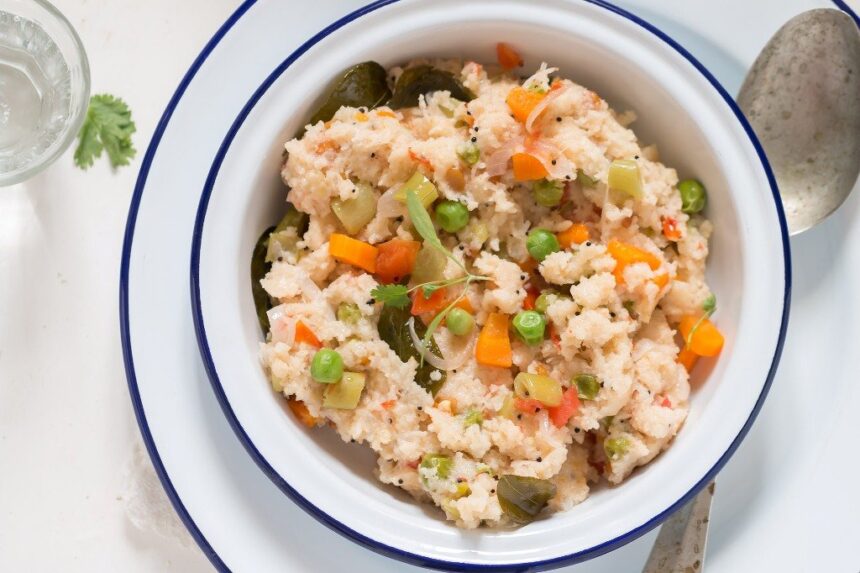
Vegetable upma is a classic Indian breakfast that is filling, nutritious, and very easy to make. It is prepared using rava (semolina), fresh vegetables, and mild spices. This dish is perfect for beginners, working people, kids, and elders because it is light on the stomach and quick to cook.
- What Is Vegetable Upma
- Why Vegetable Upma Is a Healthy Breakfast Option
- Ingredients Required for Vegetable Upma
- Preparation Before Cooking
- Step-by-Step Vegetable Upma Recipe
- Step 2: Prepare Tempering
- Step 3: Cook Vegetables
- Step 4: Add Water and Salt
- Step 5: Add Rava and Cook
- Step 6: Final Touch
- Total Time Required
- Serving Suggestions
- Common Mistakes to Avoid
- Storage Tips
- Why This Recipe Is Beginner Friendly
- Frequently Asked Questions
- Final Thoughts
What Is Vegetable Upma
Vegetable upma is a South Indian breakfast dish made by cooking roasted rava with water, vegetables, and simple tempering. It has a soft texture and mild taste, making it suitable for all age groups.
Adding vegetables increases fiber, vitamins, and overall nutrition, turning a simple dish into a complete meal.
Why Vegetable Upma Is a Healthy Breakfast Option
Vegetable upma provides slow-releasing energy and keeps you full for a long time. It is low in oil, easy to digest, and can be customized with different vegetables.
When prepared at home, it is much healthier than packaged breakfast foods and gives you control over ingredients and portion size.
Ingredients Required for Vegetable Upma
Below is a detailed table showing all ingredients and exact quantities.
Ingredients Table
| Ingredient | Quantity | Notes |
|---|---|---|
| Rava (semolina) | 1 cup | Use coarse rava |
| Onion | 1 medium | Finely chopped |
| Carrot | 1 small | Finely chopped |
| Green peas | ¼ cup | Fresh or frozen |
| Beans | ¼ cup | Finely chopped |
| Green chili | 1 small | Optional |
| Mustard seeds | ½ teaspoon | For tempering |
| Urad dal | 1 teaspoon | Optional |
| Curry leaves | 8–10 | Recommended |
| Ginger | 1 teaspoon | Finely chopped |
| Salt | As per taste | |
| Oil or ghee | 2 tablespoons | Any cooking oil |
| Water | 2½ cups | Adjust as needed |
| Lemon juice | 1 tablespoon | Added at the end |
| Fresh coriander | 2 tablespoons | For garnish |
Preparation Before Cooking
Doing basic preparation first makes cooking easier and faster.
Preparation Table
| Step | Time | What to Do |
|---|---|---|
| Chop vegetables | 10 minutes | Keep aside |
| Measure ingredients | 5 minutes | Ready before cooking |
| Heat water | 2 minutes | Keep warm |
Step-by-Step Vegetable Upma Recipe
Step 1: Dry Roast the Rava
Heat a pan on low flame. Add rava and dry roast it until it turns aromatic. Do not brown it. Keep stirring continuously.
Roasting Details
| Action | Flame | Time |
|---|---|---|
| Roast rava | Low | 5–7 minutes |
Remove roasted rava and keep aside.
Step 2: Prepare Tempering
In the same pan, heat oil or ghee. Add mustard seeds and let them crackle. Add urad dal and roast until light golden. Add curry leaves, green chili, and ginger.
Tempering Table
| Ingredient | Time |
|---|---|
| Mustard seeds | 30 seconds |
| Urad dal | 30 seconds |
Step 3: Cook Vegetables
Add chopped onion and sauté until soft. Add carrot, beans, and peas. Sprinkle a little salt, cover, and cook until vegetables become tender.
Vegetable Cooking Table
| Vegetable | Time | Flame |
|---|---|---|
| Onion | 2–3 minutes | Medium |
| Mixed vegetables | 5–6 minutes | Medium-low |
Step 4: Add Water and Salt
Pour in warm water and add salt as needed. Increase flame and bring water to a gentle boil.
Water Boiling Details
| Action | Time |
|---|---|
| Water boiling | 3–4 minutes |
Taste the water. It should be slightly salty.
Step 5: Add Rava and Cook
Lower the flame. Slowly add roasted rava while stirring continuously to avoid lumps. Mix well.
Cover and cook on low flame for a few minutes until the upma becomes soft and fluffy.
Cooking Time Table
| Stage | Time |
|---|---|
| Mixing rava | 2 minutes |
| Final cooking | 3–4 minutes |
Step 6: Final Touch
Switch off the flame. Add lemon juice and chopped coriander. Mix gently and rest for 2 minutes before serving.
Final Step Table
| Action | Time |
|---|---|
| Garnish & rest | 2 minutes |
Total Time Required
| Process | Time |
|---|---|
| Preparation | 15 minutes |
| Cooking | 20 minutes |
| Total | 35 minutes |
Serving Suggestions
Vegetable upma tastes best when served hot. You can serve it with coconut chutney, plain curd, or a cup of tea. It also works well as a lunchbox meal.
Common Mistakes to Avoid
Adding rava to cold water can create lumps. Always add rava slowly to boiling water while stirring. Using too much water can make upma sticky, while less water makes it dry.
Roasting rava properly is the key to soft upma.
Storage Tips
Vegetable upma is best eaten fresh. If needed, you can store leftovers.
| Storage Method | Duration |
|---|---|
| Room temperature | Same day |
| Refrigerator | Up to 24 hours |
Reheat with a little water on low flame.
Why This Recipe Is Beginner Friendly
This recipe uses simple ingredients, mild spices, and clear steps. Tables explain exactly what to add, how long to cook, and what texture to expect. Even first-time cooks can prepare this dish confidently.
Frequently Asked Questions
Can I make upma without vegetables?
Yes, but vegetables improve nutrition and taste.
Which rava is best for upma?
Coarse rava gives the best texture.
Is vegetable upma good for weight control?
Yes, when cooked with less oil and more vegetables.
Can kids eat vegetable upma?
Yes, it is soft, mild, and easy to digest.
Can I use ghee instead of oil?
Yes, ghee adds good flavor and aroma.
Final Thoughts
Vegetable upma is a simple yet nutritious Indian breakfast that suits every household. With the right method and proper cooking time, you can make soft and tasty upma every time.
For more detailed, beginner-friendly Indian recipes, explore myfirstrecipe.com and make everyday cooking easy and enjoyable.